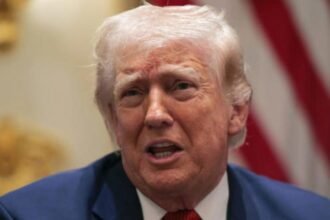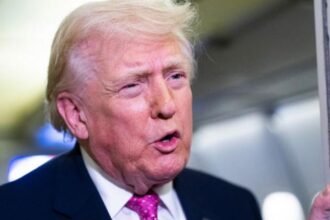

Donald Trump thought he was playing hardball. Instead, he blew it himself. In one of the most stunning self-inflicted political wounds in recent memory, Trump accidentally sabotaged his own party’s leverage during the Department of Homeland Security shutdown, leaving Republicans utterly destroyed and scrambling for cover while Democrats walked away with a rare, unexpected victory.
The fight began simply enough. Democrats told Republicans they had two options: fund DHS without ICE, or fund all of DHS including ICE but with major reforms attached. Republicans rejected both offers, and the standoff dragged on for weeks.
The consequences hit ordinary Americans fast and hard. TSA employees were working without pay. Airport lines stretched to five and six hours long. At least one plane crashed as a direct result of the chaos caused by the shutdown.
Senate Republicans eventually went to Trump with a compromise. Democrats would fund all of DHS except ICE, airports would return to normal, and Republicans would get another shot at ICE funding later. Trump said no, demanding Democrats also support the unrelated SAVE Act as part of any deal.
That refusal cost his party dearly. Rather than accepting a workable deal, Trump chose confrontation. He dispatched ICE agents to airports across the country, claiming they were there to “assist” TSA workers, but the move was widely seen as a political pressure tactic aimed directly at Senate Minority Leader Chuck Schumer.
Schumer did not blink. Despite widespread expectation from the Washington press corps that he would fold under pressure, Schumer organized a series of Senate votes that made Democratic intentions crystal clear. They would fund DHS, but not ICE, and they would not be bullied into surrendering.
The ICE agents sent to airports made things worse, not better. They stood around doing nothing while frustrated travelers waited in lines that stretched for hours. Connecticut Congresswoman Rose DeLauro then confirmed through the TSA administrator that DHS had chosen to pay ICE, Border Patrol, the Secret Service, and the Coast Guard, while leaving TSA workers without a paycheck.
That revelation shifted the political ground completely. Senate Republicans had been pointing fingers at Schumer and the Democrats, but that argument collapsed overnight. Trump then made a move that stunned even his own allies.
He claimed emergency powers to pay TSA workers through an executive order, announcing he would “immediately pay our TSA Agents in order to address this Emergency Situation.” The problem was that no legal authority exists for a president to spend money without an act of Congress.
Josh Chafetz, a law professor at Georgetown University, called the move not just unconstitutional but “anti-constitutional.” He said such orders “strike at the core of one of the principles that allows our entire constitutional order to function.” It was a remarkable overreach, even by the standards of this administration.
Before Trump’s executive order could even be debated, Senate Majority Leader John Thune moved quickly in the early hours of Friday morning. He brought a clean DHS funding bill to the floor, one that excluded ICE. It passed by voice vote with only a handful of senators present. Schumer had won.
The victory was not total. Democrats did not get the ICE reforms they wanted, including a ban on agents wearing masks or a requirement that they follow judge-signed warrants. But forcing Senate Republicans to cave was itself a significant achievement, especially given Schumer’s track record.
During the last government shutdown in November, Schumer had engineered a Democratic surrender just before Thanksgiving. Many in the liberal base expected him to fold again. This time, he held firm, and the difference was noticeable.
Trump’s decision to claim unilateral authority to pay TSA workers created an immediate and damaging question for his own side. If he had the power to do this all along, why did he wait? Why force Thune and Speaker Mike Johnson to spend weeks negotiating, posturing, and absorbing public blame for airport chaos?
The answer, as one veteran political observer put it plainly, is that Trump accidentally sabotaged his own party’s negotiating position the moment he claimed powers he may not legally have. Thune lost his ability to keep blaming Democrats the instant Trump suggested he could have solved the problem himself at any time.
Johnson rejected the Senate bill, calling it “a joke,” and insisted the House would pass its own DHS funding measure. He accused Democrats of treating Americans like “pawns.” The irony was not lost on observers. Trump and the Republicans were the ones who had been moving their own pieces off the board.
The deeper problem for Trump is that his strongman instincts keep backfiring. Sending ICE agents to airports was meant to project strength and force Democrats to the table. Instead, it revealed weakness. The agents stood around doing nothing, the lines kept growing, and the political pressure kept building against the White House.
Trump’s shutdown miscalculation also exposed a growing vulnerability with a voter group that rarely feels the sting of political dysfunction. Affluent, frequent travelers, a demographic that leans toward stability and institutional order, got a firsthand look at what broken governance feels like. That is not a constituency any party wants to alienate heading into the next election cycle.
In the end, the story of the DHS shutdown is not just about airports or ICE or funding bills. It is about a president who tried to play every side at once and ended up destroying the leverage his own party desperately needed. Republicans did not lose this fight because Democrats were too strong. They lost it because their own leader blew it himself.